From July 17 to 20, the 2026 World Artificial Intelligence Conference (WAIC 2026) and the High-Level Meeting on Global AI Governance were held in Shanghai. In his keynote address at the opening ceremony, President Xi Jinping stated that China will “promote the deployment and application of the ‘Mazu’ meteorological AI early-warning solution in 30 countries, watching over the lights of countless homes and safeguarding peace across the world’s seas.” Meteorological AI early warning thereby became a major initiative through which China supports the development of global artificial intelligence.
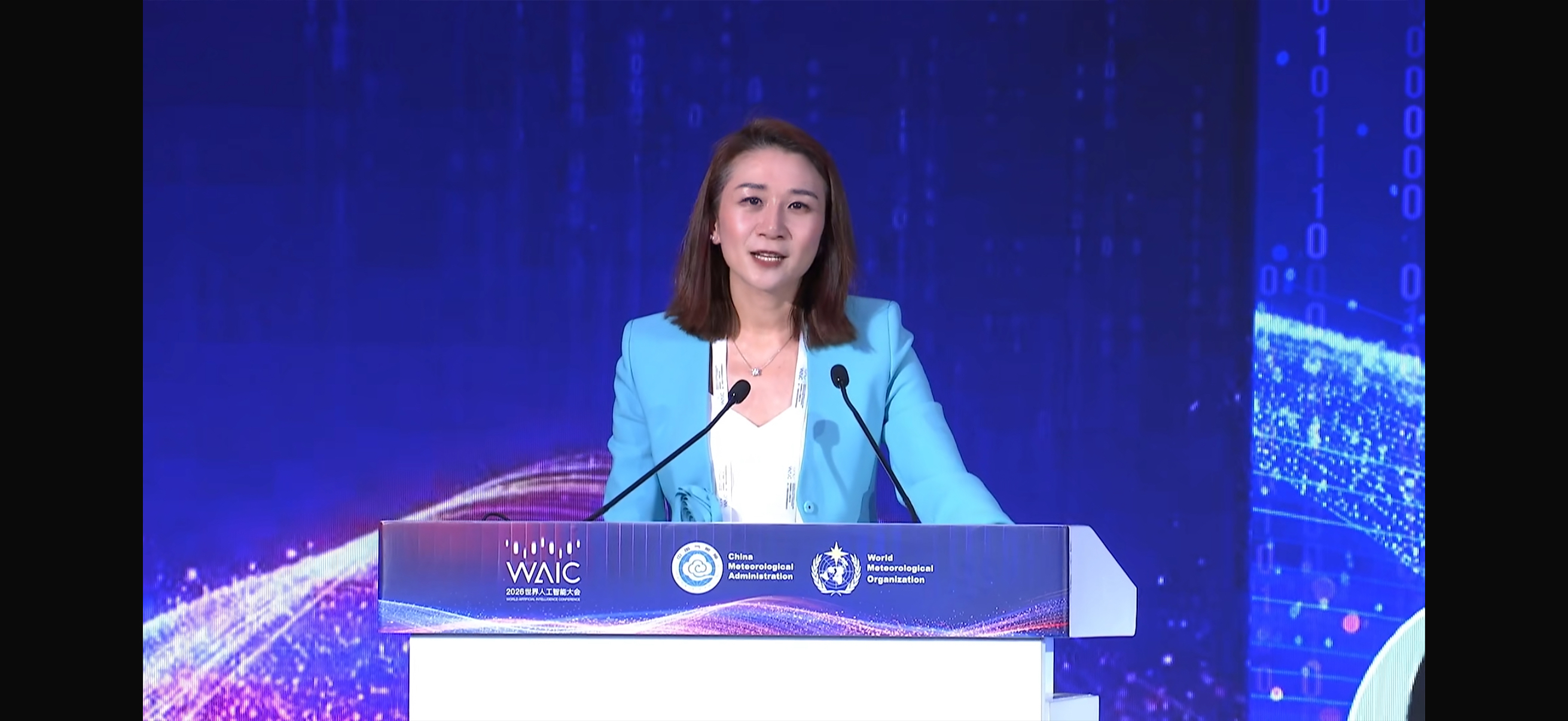
On the afternoon of July 17, the WAIC 2026 Meteorology Special Session was held. Professor Mengqian Lu, Director of the World Sustainable Development Institute (WSDI) at the Hong Kong University of Science and Technology (HKUST), delivered a keynote report titled “‘Mazu’ Global Digital-Intelligence Innovation and Application — Exchange Case Study: A Subseasonal Multi-Hazard Analysis and Early-Warning Assistant Agent System.” The report presented the first case of the “Mazu” platform being deployed in South America — the development of a subseasonal multi-hazard analysis and early-warning assistant agent system in Brazil under the SEPRESS programme (Seamless Prediction and Services for Sustainable Natural and Built Environments), marking “Mazu”’s inaugural application in South America within the framework of South-South cooperation. The full video of Professor LU's keynote report at the WAIC 2026 Meteorology Special Session is available here: https://mp.weixin.qq.com/s/co4ekMlXntlmehalmNTWaA
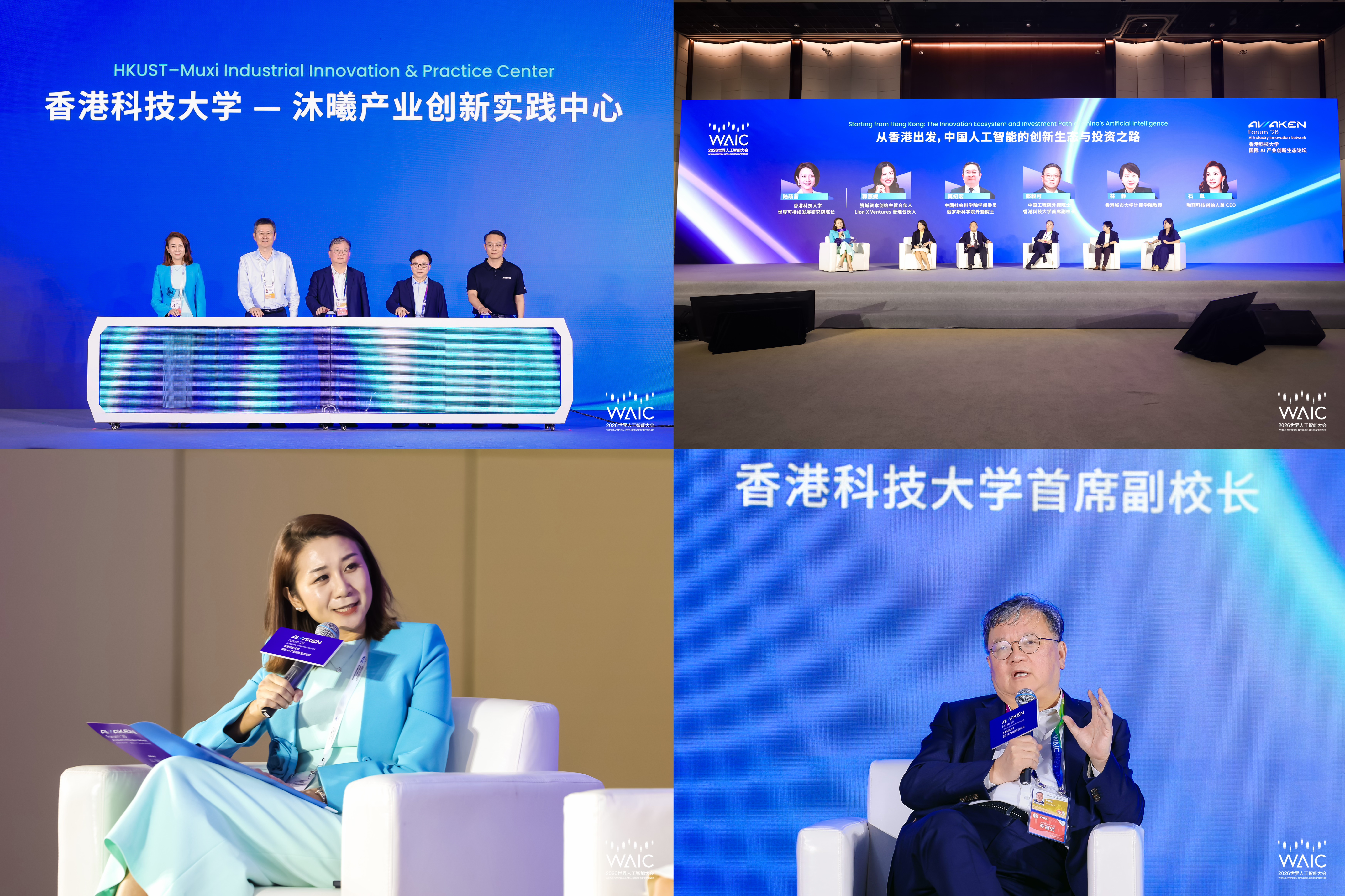
On July 19, the “HKUST International AI Industry Innovation Ecosystem Forum” was held during WAIC 2026. At the forum, HKUST and MetaX Integrated Circuits (Shanghai) Co., Ltd. signed an agreement to jointly establish the “HKUST–MetaX Industry Innovation Practice Center,” with Professor Mengqian Lu appointed as its director. The center focuses on applying GPU + AI technologies to address climate change and advance sustainable development, targeting areas such as aviation and maritime shipping, new energy, and smart port enablement, and driving the translation of cutting-edge technologies into industrial applications and global deployment. During the roundtable dialogue held at the same event, Yike Guo, International Member of the Chinese Academy of Engineering and Provost of HKUST, pointed out that artificial intelligence will break down traditional disciplinary boundaries, and that its core value lies in handling complex systems — with the most important complex system being the Earth itself. Meteorological AI and Earth system science, he noted, are precisely the fields where AI has the greatest potential to make a difference.
Looking back at WAIC 2026, from the opening keynote’s call to deploy “Mazu” in 30 countries, to the scientific research reports of the Meteorology Special Session and HKUST’s industrial practice, meteorological AI has shown a trend of coordinated advancement across strategic deployment, scientific research, and industry implementation. As one of the research teams taking part in this endeavor, the SEPRESS team still has a long and arduous road ahead in the fields of multi-hazard early warning and Earth system science. Going forward, the team will continue to advance relevant research and implementation in a steady and down-to-earth manner, contributing its share to helping “Mazu” serve more developing countries.