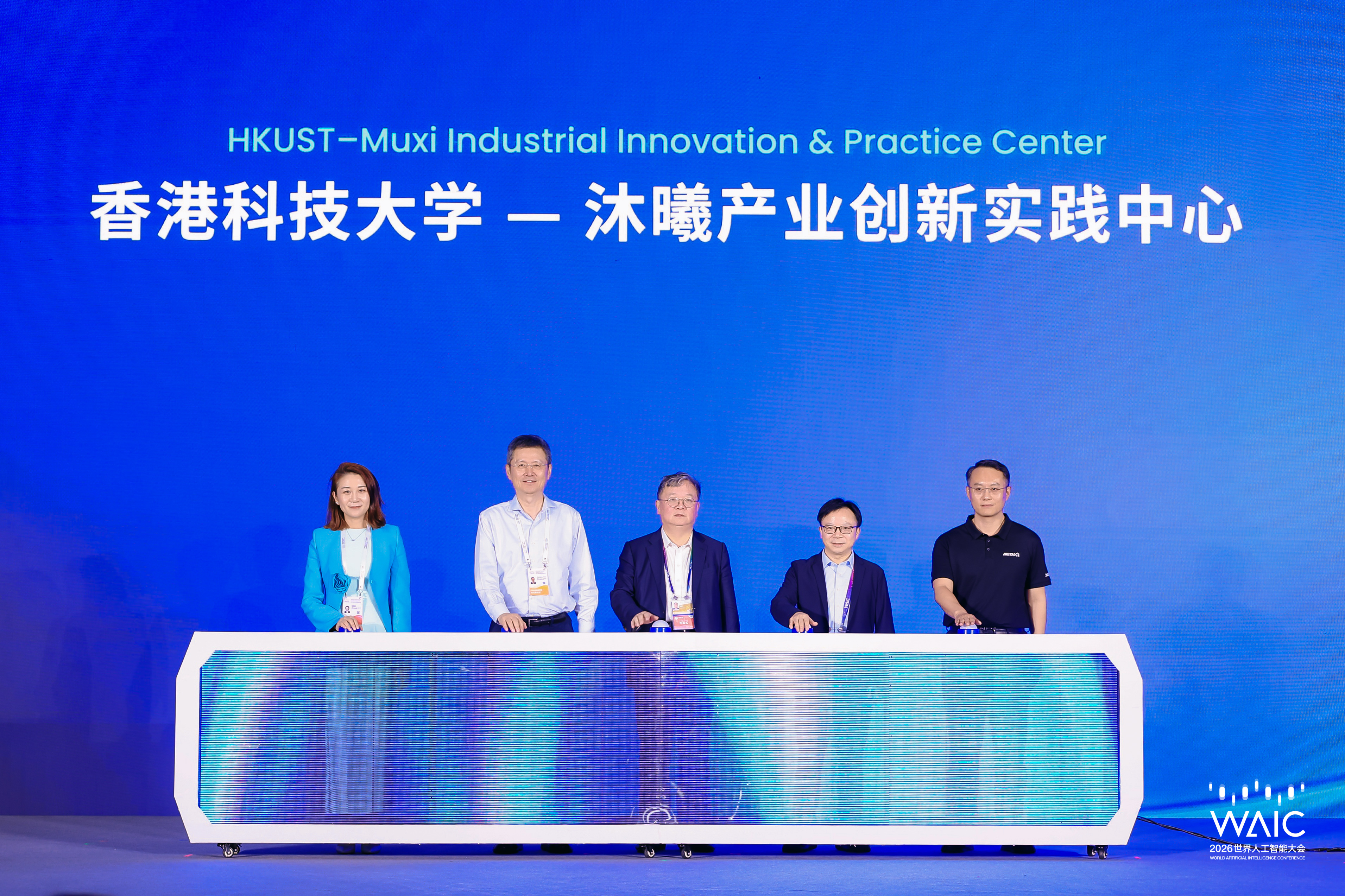
On July 19, 2026, at the “HKUST International AI Industrial Innovation Network” held during the World Artificial Intelligence Conference (WAIC) 2026, The Hong Kong University of Science and Technology (HKUST) and MetaX Integrated Circuits (Shanghai) Co., Ltd. (“MetaX”) officially signed the HKUST–MetaX Industrial Innovation Practice Center Project Agreement. Building upon the existing collaboration framework of their joint laboratory, the two parties will jointly establish the “HKUST–MetaX Industrial Innovation Practice Center” (hereinafter “the Practice Center”) to deepen their GPU+AI technology synergy, extend artificial intelligence applications into the fields of climate change and sustainable development, and accelerate industrial transformation and global deployment. The agreement designates the World Sustainable Development Institute (WSDI) at HKUST as its executing entity, with Professor Mengqian Lu, Director of WSDI, serving as Director of the Center. The Center will focus on applying GPU+AI technology to climate change and sustainable development, with an emphasis on empowering areas such as aviation and shipping, new energy, and smart ports, and on driving the translation of frontier technologies into industries and their global deployment.
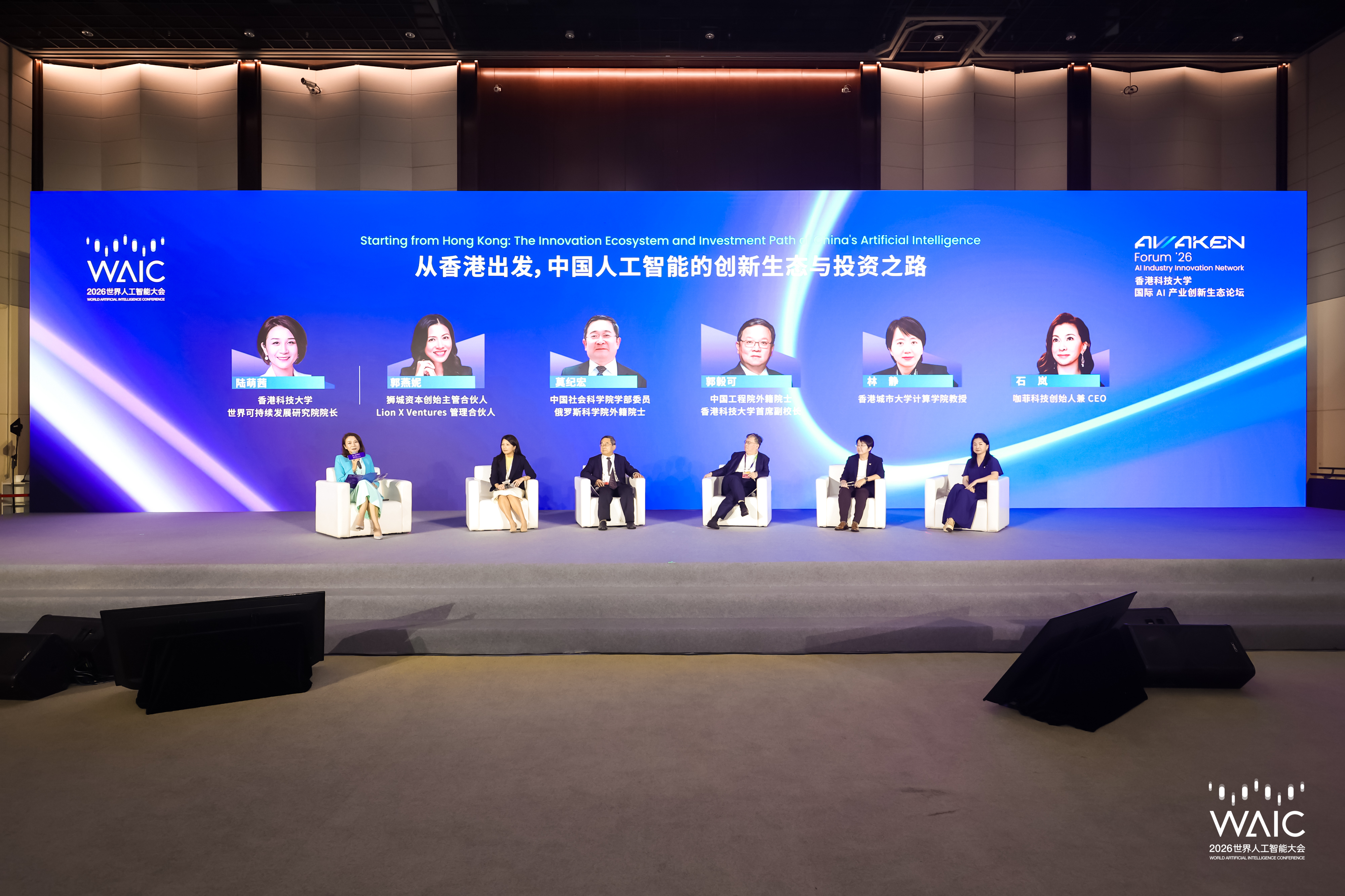
On the sidelines of the forum, a roundtable dialogue moderated by Professor Mengqian Lu was held under the theme “From Hong Kong: The Innovation Ecosystem and Investment Path of Chinese AI.” The roundtable reached a four-point consensus: First, AI will break down traditional disciplinary boundaries and focus on tackling two major complex systems — Earth system science, and life sciences and healthcare — forming a two-way innovation closed loop. Second, AI development should be guided by the core principle of orienting toward the good and the beautiful, upholding a positive value orientation from underlying development through to application deployment, so that technology serves human well-being. Third, Chinese AI has broad room for global expansion, with particular potential to reach emerging markets along the Belt and Road, in Southeast Asia, and in South America. Fourth, cross-border deployment must simultaneously address the challenges of compliance and governance, using rule adaptation to safeguard high-quality overseas expansion. Hong Kong will leverage its advantages as an international hub and serve as a core bridge connecting the Chinese mainland’s AI industry with the world. As Professor Mengqian Lu concluded, the discussion around artificial intelligence will be an ongoing topic — one that concerns both deep philosophical reflection and tangible industrial value.
The signing of this cooperation agreement and the establishment of the Practice Center mark a solid step forward for HKUST and MetaX in advancing the deep integration of artificial intelligence with sustainable development. Taking this forum as an opportunity, the two parties will join hands to build an open, collaborative, and sustainable GPU+AI industrial innovation ecosystem, contributing to the enhancement of the country’s scientific and technological competitiveness in green computing and sustainable development.