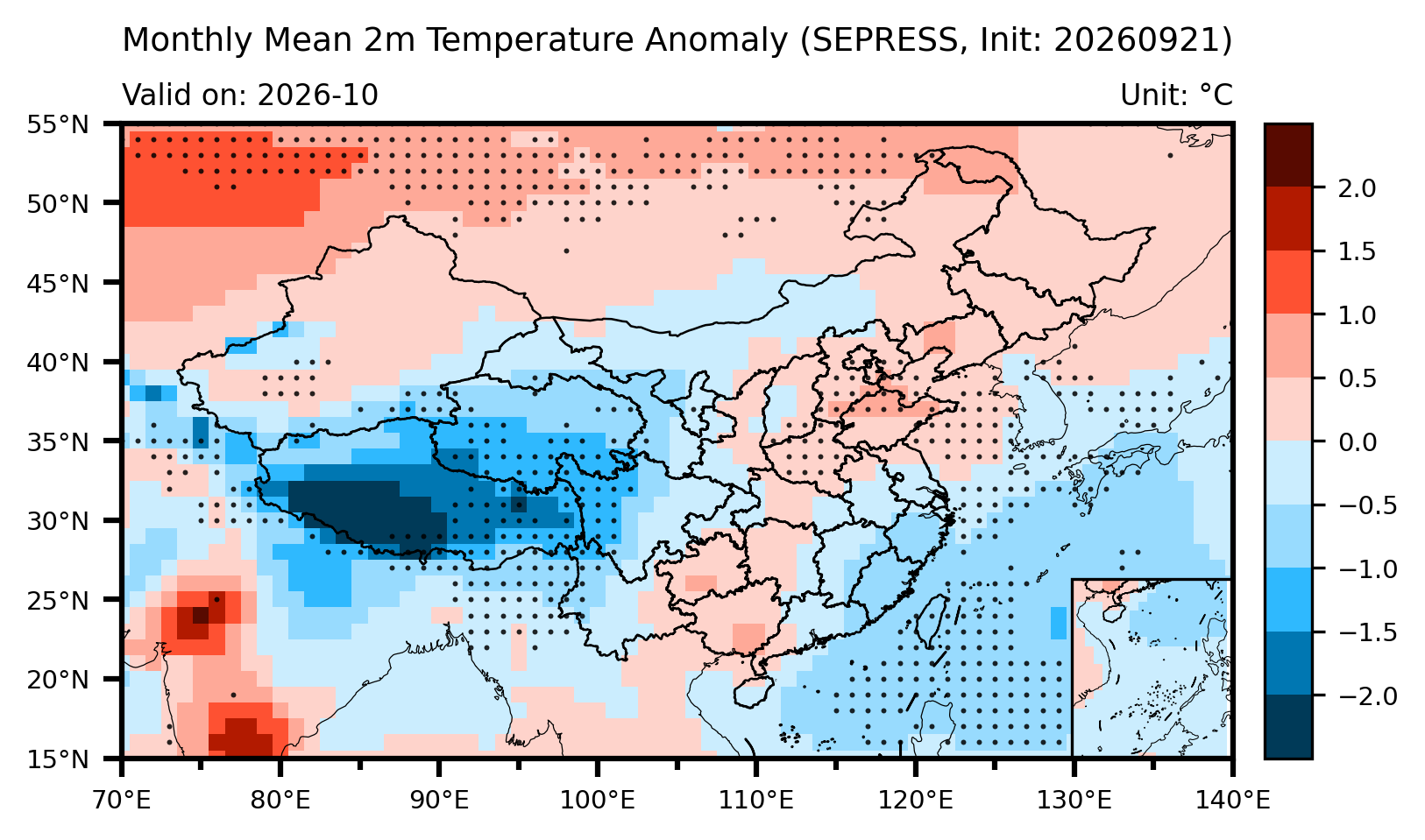
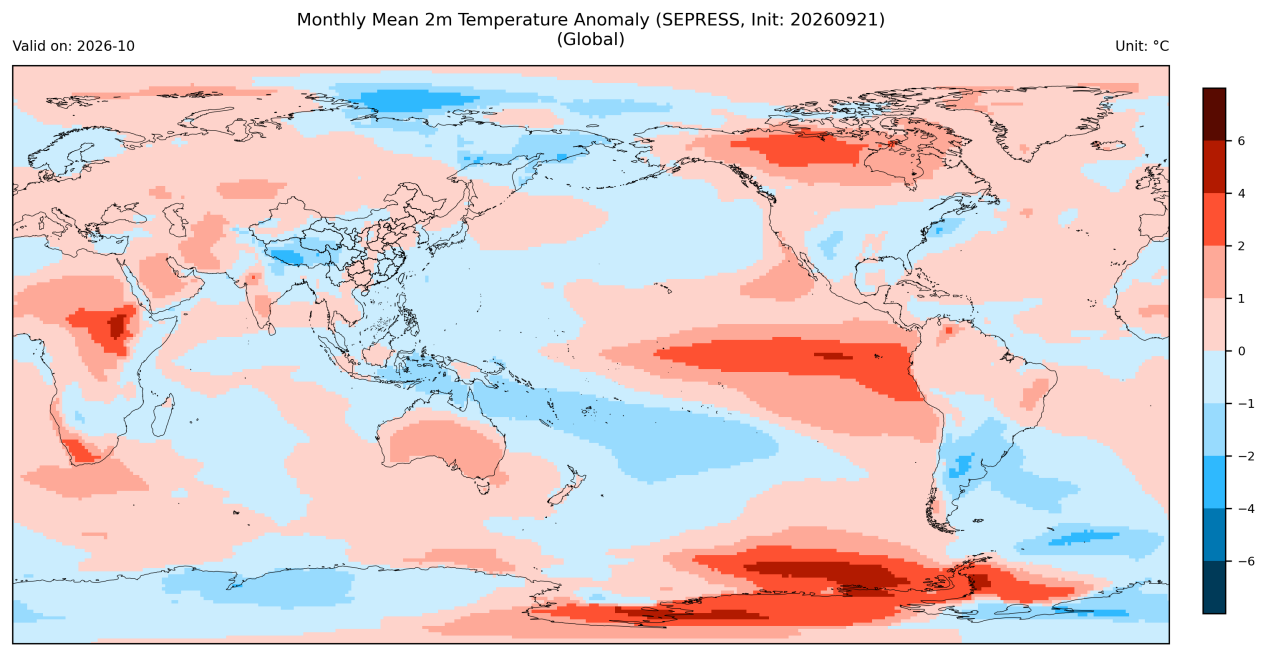
In October 2026, China's surface temperature will be characterized by an overall "cool in the southwest and southeastern coastal areas, warm in the central and northern regions" distribution pattern. Specifically, temperatures in Southwest China, Gansu, western Inner Mongolia, Ningxia, Chongqing, East China, and eastern South China will be lower than normal, with most of Tibet and most of Qinghai experiencing the most significant cool anomalies, locally exceeding 2.0°C below normal. In contrast, temperatures in northern Xinjiang, eastern Inner Mongolia, Northeast China, North China, Central China, and western South China will range from near-normal to higher than normal.
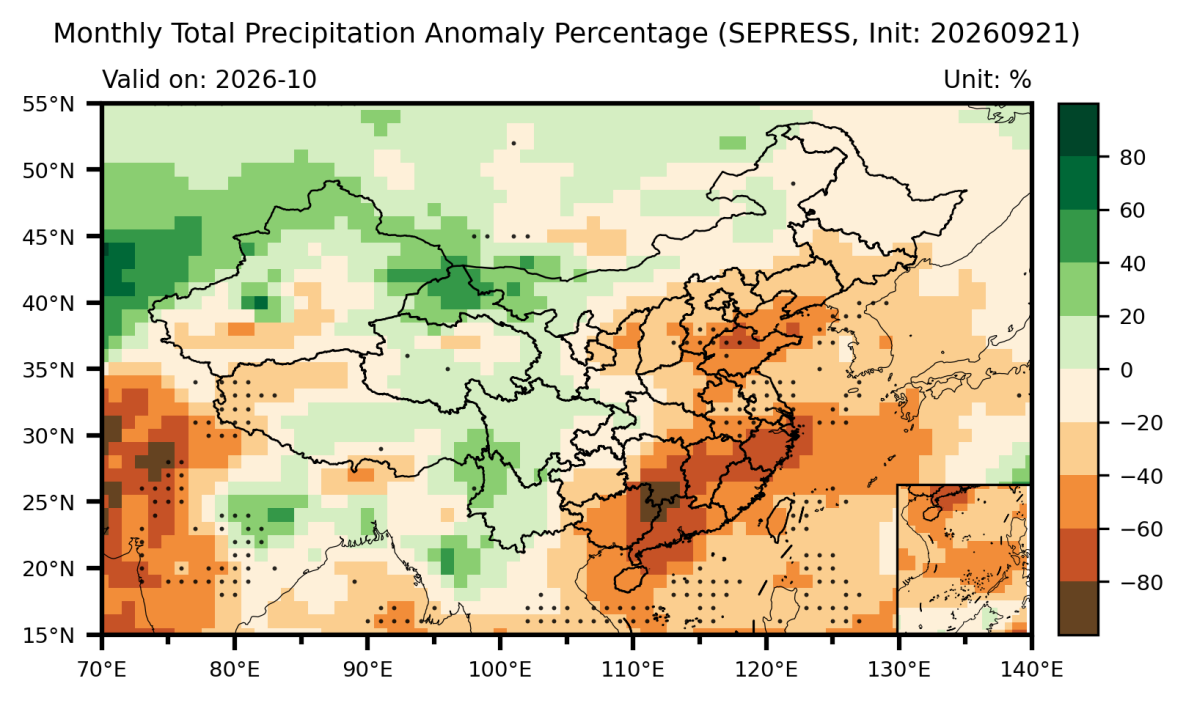
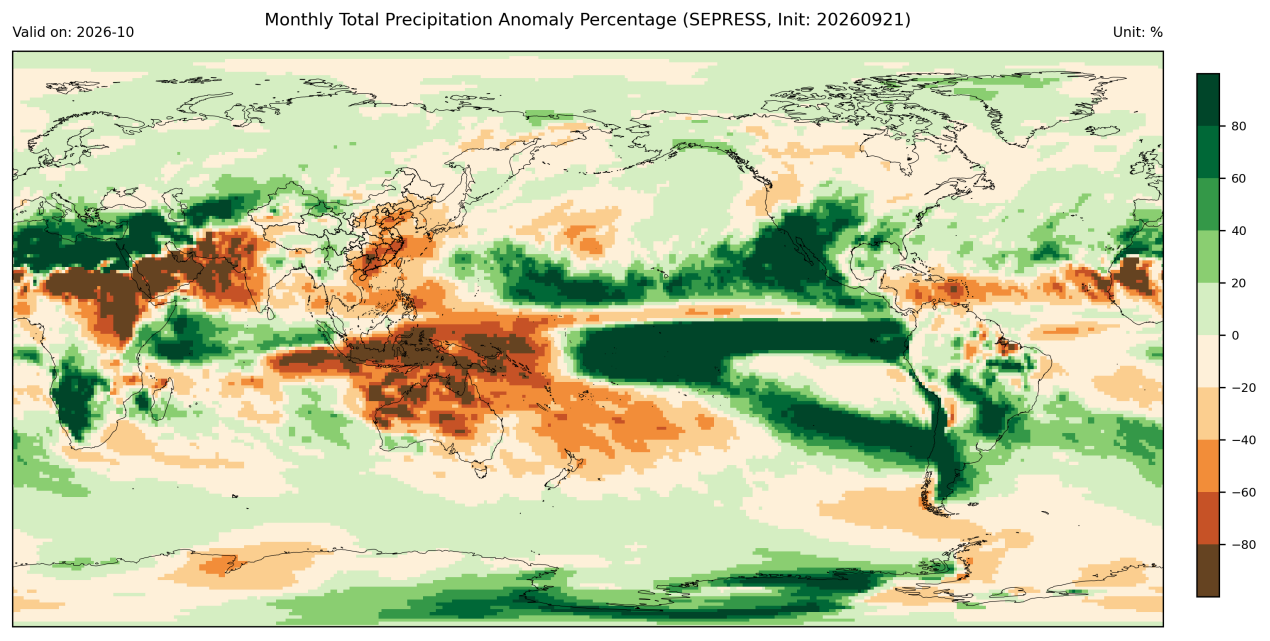
Regarding precipitation, China is expected to exhibit an overall distribution pattern of "below-normal in eastern coastal areas, above-normal in central and western regions". Precipitation in most of Northeast China, North China, Central China, East China, and South China will be below normal, with deficits reaching 40%–80% or more in some coastal areas. In contrast, precipitation in most of Southwest China, Northwest China, and western Inner Mongolia will be above normal by 40%–60%.
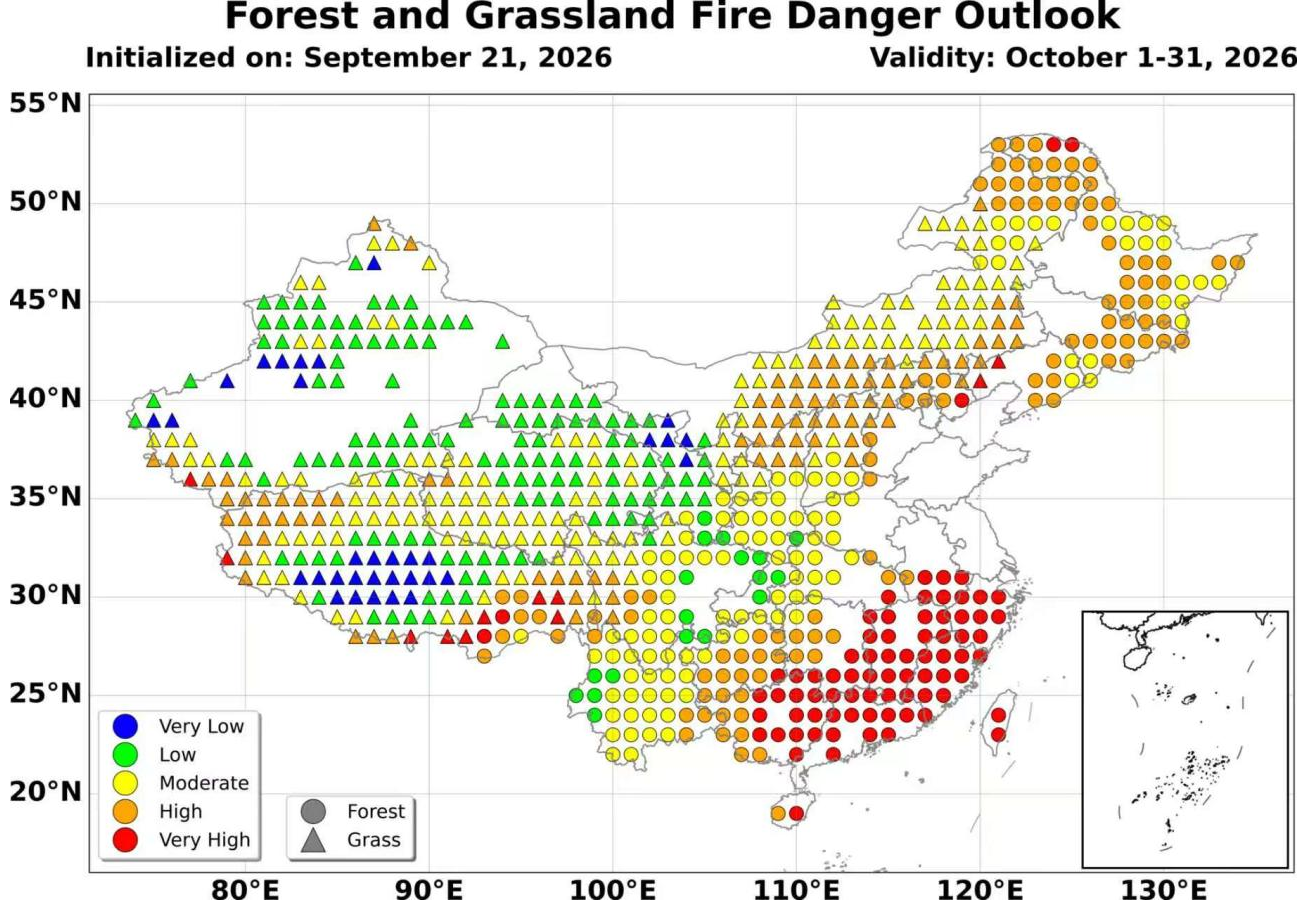
In October 2026, the overall forest and grassland fire danger rating across China is expected to be moderately high risk. Specifically, northern Heilongjiang, Guangxi, Guangdong, Fujian, southern Hunan, Jiangxi, southern Anhui, Zhejiang, western Liaoning, southwestern Xinjiang, and western and southeastern Tibet face a high risk of forest and grassland fire danger.
References:
Pan, Y., Yang, J., Yao, Q., et al. (2024). How well do multi-fire danger rating indices represent China forest fire variations across multi-time scales. Environmental Research Letters, 19, 044002, https://doi.org/10.1088/1748-9326/ad2d3d.
Pan, Y., Yang, J., Lu, M., et al. (2025). Bridging the "Last-mile Gap" in Climate Services Delivery: A Dynamical-AI Hybrid Framework for Next-Month Wildfire Danger Prediction and Emergency Action. Advances in Atmospheric Sciences, https://doi.org/10.1007/s00376-025-5091-4.
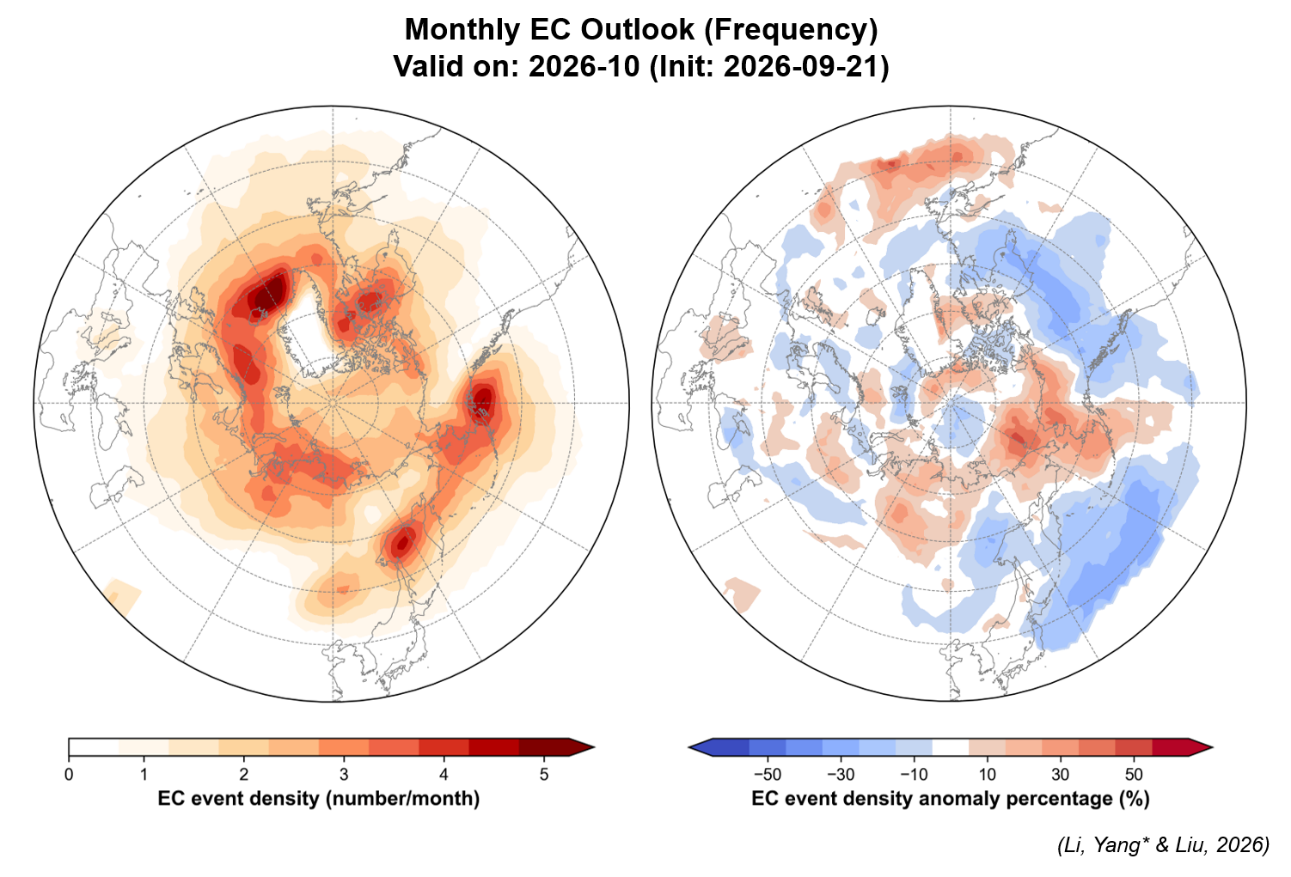
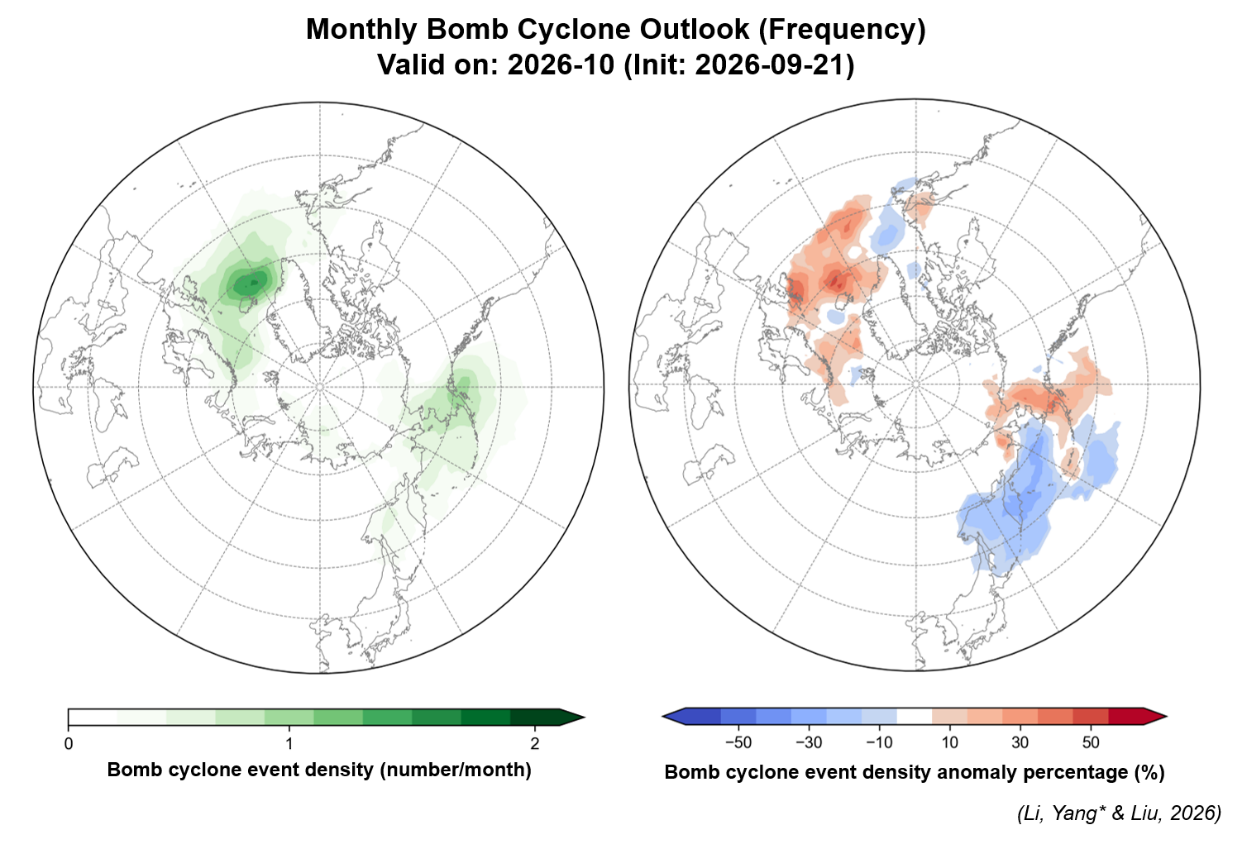
Predictions for Northern Hemisphere extratropical cyclones indicate that cyclone activities in October 2026 will be significantly above normal over the region stretching from the eastern coast of North America to the mid-latitude western North Atlantic, the Far East, the Bering Strait, and Alaska. Conversely, extratropical cyclone activities over the central North Pacific and the North American continent will be significantly below normal compared to the same period in normal years. Additionally, bomb cyclone events over the North Atlantic and waters near Alaska will be above normal, while bomb cyclone activities over the Sea of Okhotsk to the Kamchatka Peninsula will be below normal.
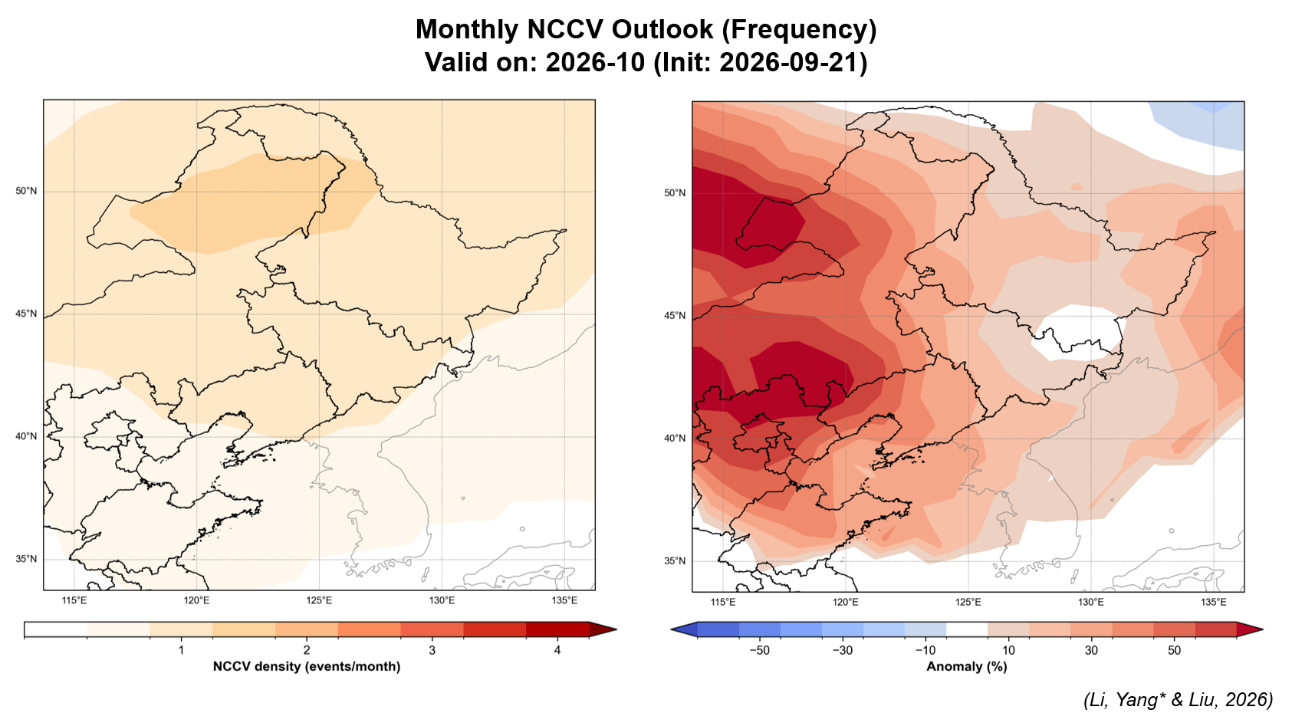
Forecasts for the Northeast Cold Vortex (NECV) indicate that the three northeastern provinces of China and eastern Inner Mongolia will be influenced by at least 1 Northeast Cold Vortex event in October 2026, with the active center located in the region from Hulunbuir in Inner Mongolia to northern Heilongjiang. Cold vortex activities over Northeast China, especially Beijing-Tianjin-Hebei, Liaoning, and eastern Inner Mongolia, will be significantly above normal by 30%–70%.
Global near-surface land temperatures in October 2026 will be characterized by significant warming in tropical, high-latitude, and polar regions, and cooling in some mid-latitude areas. Northern North America, central India, and localized parts of southern India will experience warm anomalies exceeding 2–4°C. In contrast, temperatures around the Qinghai-Tibet Plateau, northern Siberia, southern North America, and southern South America will be generally near-normal or cooler.
Global precipitation will exhibit significant spatial disparities. Driven by the strong El Niño event, precipitation will be significantly above normal over the equatorial central-eastern Pacific, most of South America, mid-western North America, and southern Africa. Conversely, precipitation over the equatorial western Pacific, Southeast Asia, South Asia, southern Western Asia, most of Oceania, and central Africa will be significantly below normal.
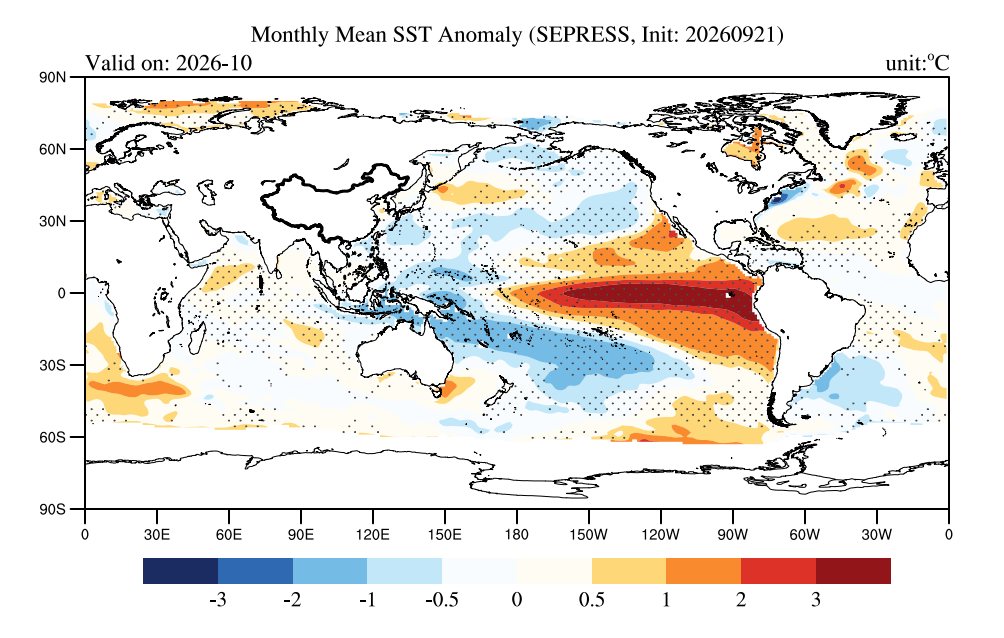
Global Sea Surface Temperature (SST) forecasts indicate that in October 2026, positive SST anomalies in the equatorial central-eastern Pacific will widely reach 2.0–3.0°C, with core regions exceeding 3.0°C, as the strong El Niño event continues to maintain a robust development state.
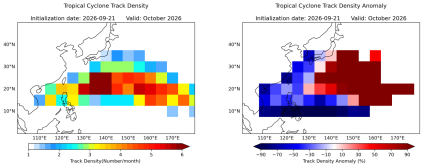
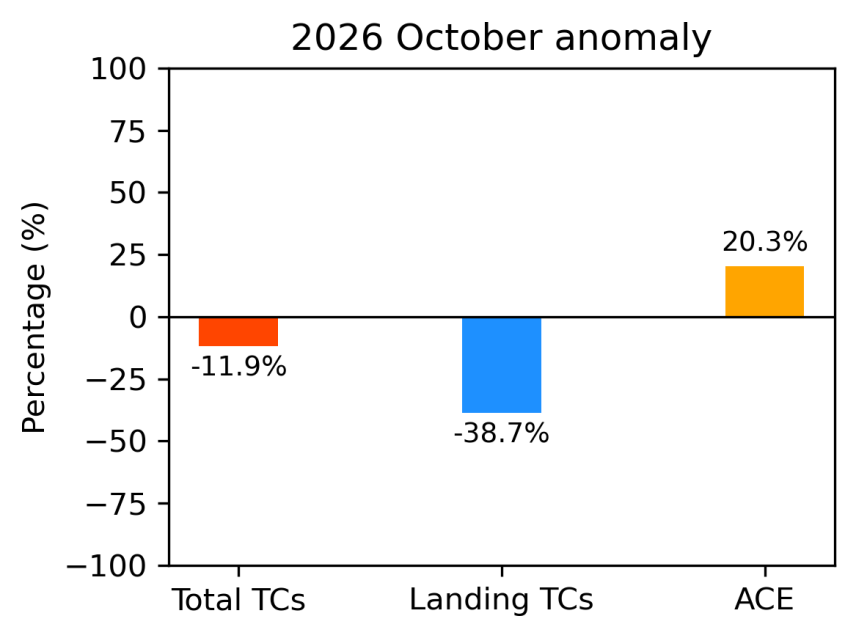
Tropical Cyclone (TC) activity predictions over the western North Pacific show that TC activity in October 2026 is expected to exhibit features of "an eastward-shifted path and significantly below-normal landfalls". Specifically, the total number of TCs generated over the western North Pacific in October 2026 will be close to the historical average. Driven by anomalous warm SSTs in the tropical Pacific and related large-scale atmospheric circulation, TC tracks will be significantly shifted eastward. Consequently, the number of TCs making landfall in China in October is predicted to decrease significantly by 38.7% compared to the historical average. However, the Accumulated Cyclone Energy (ACE), which reflects the overall destructive potential of TCs, is expected to be 20.3% higher than the historical average, indicating that the generated TCs will possess strong activity intensity.
Global Sea Surface Temperature (SST) forecasts indicate that in September 2026, positive SST anomalies in the equatorial central-eastern Pacific will widely reach 1.0–2.0°C, with core regions exceeding 2.0°C, as the strong El Niño event continues to maintain a robust development state.
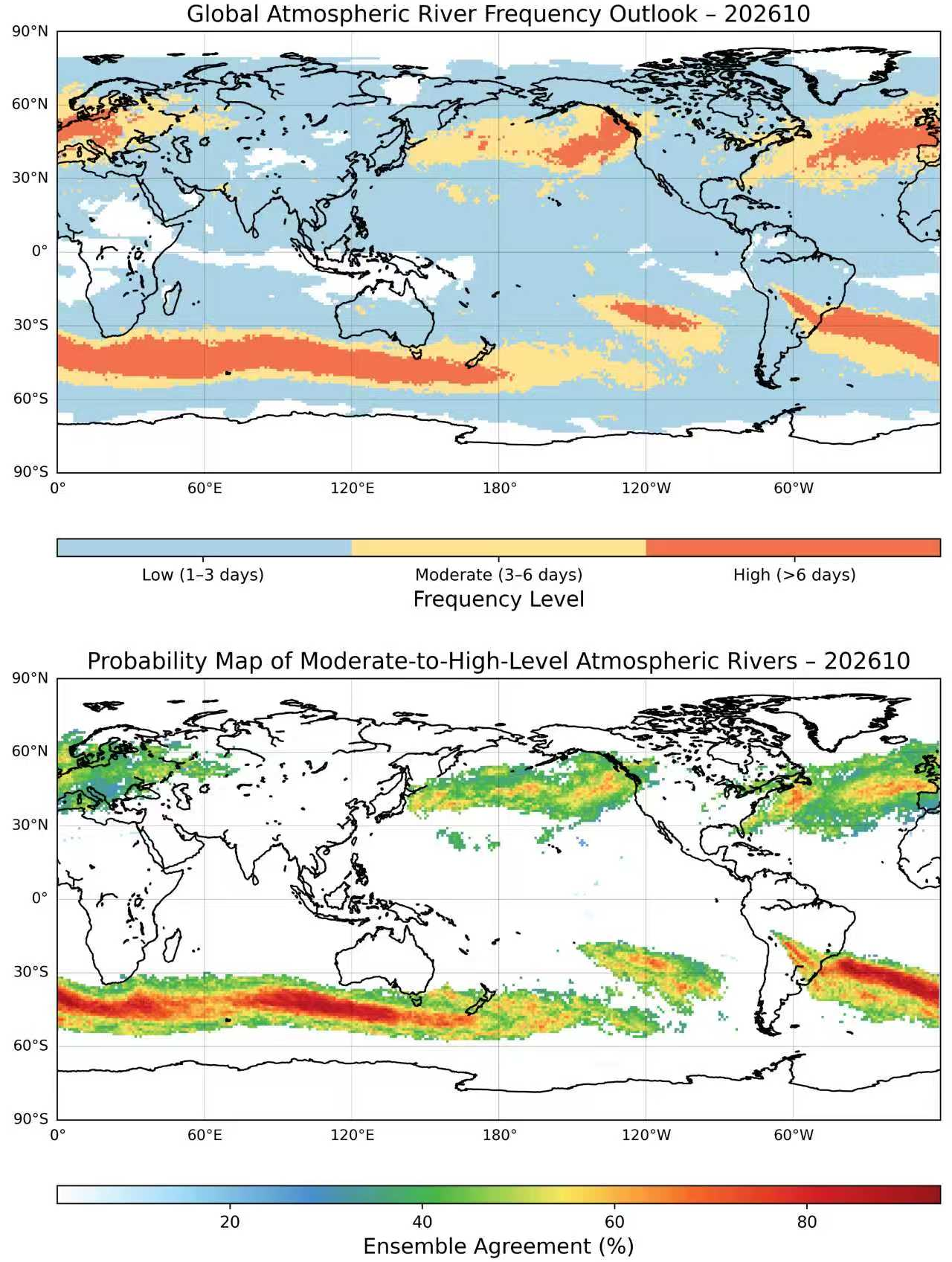
Based on the self-developed atmospheric river identification and tracking algorithm PanLu 2.0, global atmospheric rivers (ARs) for October 2026 were extracted. According to the global frequency outlook of atmospheric rivers, moderate-to-high-level atmospheric rivers are highly probable over the North Atlantic, showing strong consistency among the model ensembles.
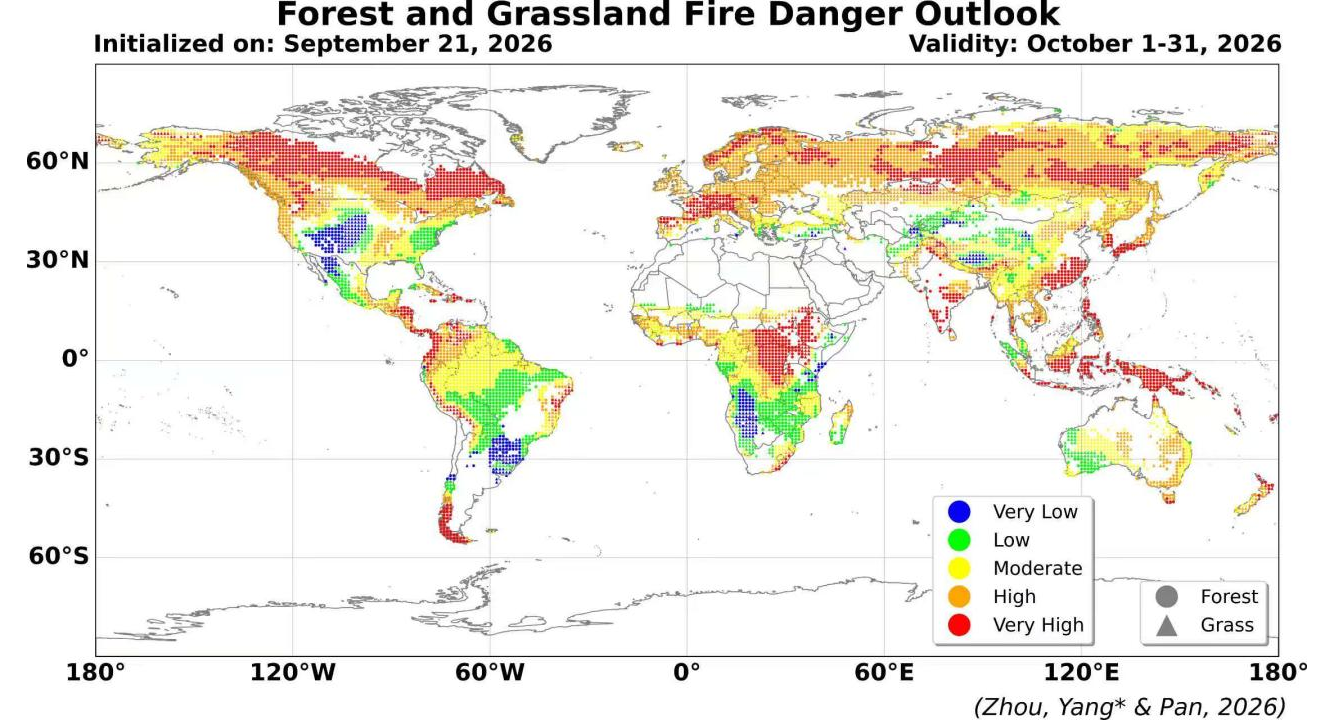
Regarding global forest and grassland fire danger, in October 2026, parts of Siberia, northern North America, northern and southern South America, western and southern Europe, central Africa, southeastern China, southern Japan, Indonesia, and India are expected to face a high risk of fire danger.
These forecasts are derived from the objective prediction methods of the SEPRESS team. The associated products represent scientific and technological outcomes intended for technical reference in disaster prevention and mitigation efforts. They should not be used as the sole basis for decision-making. Further tracking and updated forecasts from official agencies are strongly recommended.
——————————
The above monthly TC outlook is based on the SEPRESS Global Climate Seamless Prediction System. SEPRESS, or Seamless Prediction and Services for Sustainable Natural and Built Environments, is a global initiative led by the Hong Kong University of Science and Technology (HKUST) that translates scientific advancements in weather-to-climate (or, subseasonal-to-seasonal) prediction into practical, tailored solutions to enhance global climate resilience and sustainability. The initiative, endorsed by UNESCO, aims to bridge the gap between science and society by fostering partnerships and delivering actionable outcomes to support the UN’s Sustainable Development Goals. The SEPRESS team comprises hydrometeorologists and modelers from the HKUST, the Institute of Atmospheric Physics (Chinese Academy of Sciences), and Beijing Normal University.
Text and Figures contributed by: QIAN Siyu, Dipendra LAMICHHANE, SONG Yurong, ZHOU Qinyao, LI Shentong